Brooker Executive Perspective:
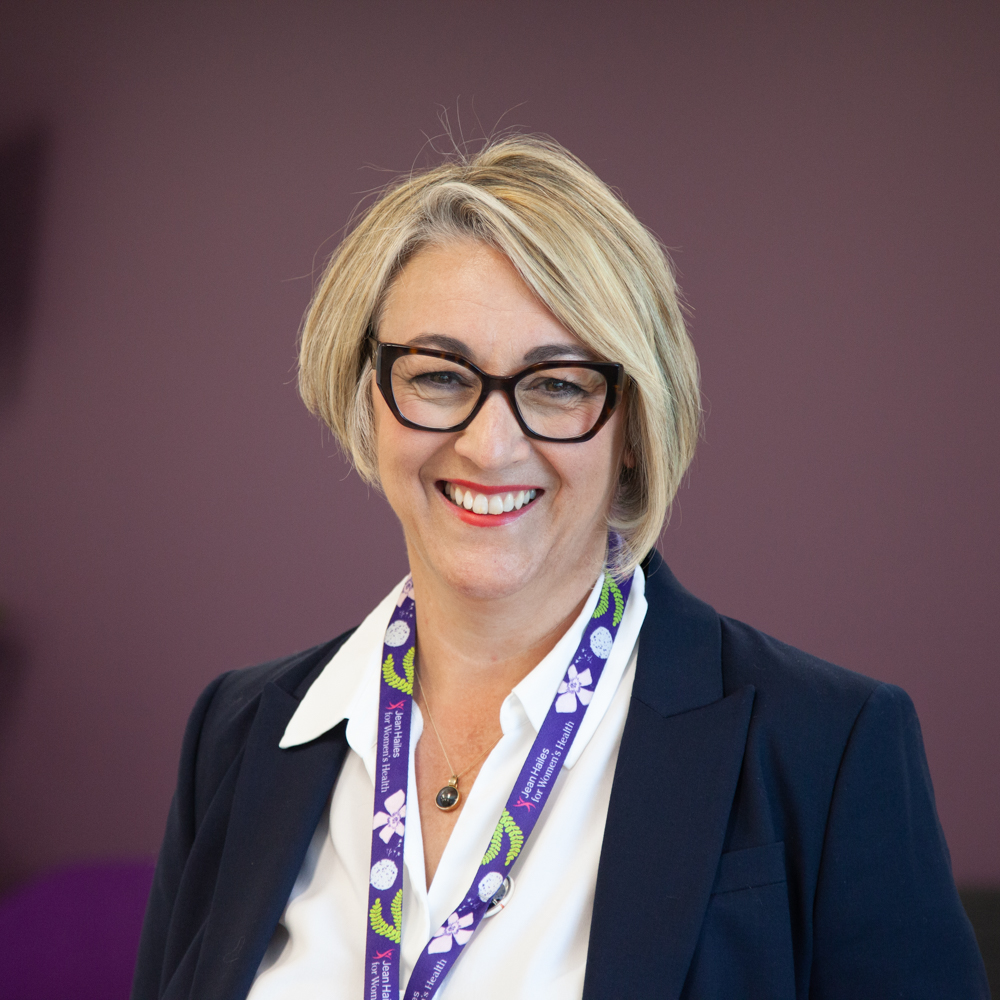
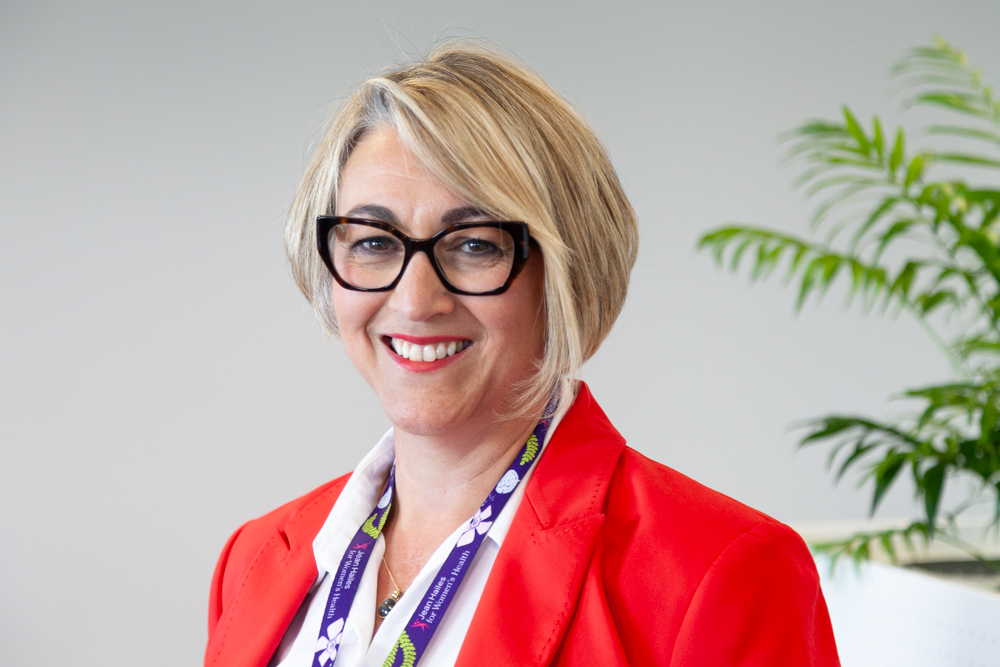
Dr Sarah White, CEO of Jean Hailes for Women’s Health
In this edition of Brooker Executive Perspectives, we speak with Dr Sarah White, Chief Executive Officer of Jean Hailes for Women’s Health. Known simply as “Sarah” to her team and peers, she leads Australia’s only federally funded National Digital Gateway for Women’s Health Information, a global first. Sarah’s career might appear, in her words, “ziggy-zaggy” from the outside, spanning research, communications, and leadership, but her throughline has always been clear: helping people access the right information to make better decisions about their health. Her reflections reveal the realities of leading in a world where misinformation moves fast, and where empowering women with evidence-based knowledge has never been more important.

Leighton:
Sarah, could you start by telling us about your role and the organisation you lead?
Sarah: Jean Hailes for Women’s Health is a national charity producing health information designed to empower women, not just explaining health, but what women can do about their health and wellbeing in their own social and cultural contexts.
We also provide education for health professionals across Australia and have been doing so for over 30 years. So, before menopause was hot, we were working in menopause and jumping up and down trying to get people to take notice of women’s health long before anybody did.
We have a broad remit when it comes to developing and delivering health information. And actually, a lot of what we do is creating health information resources that allow women and health professionals to communicate more effectively.
Alongside our national work, we run specialist women’s health clinics in Melbourne. They’re a vital source of insights as we hear directly from women as patients and from clinicians about their experiences.
About ten years ago, the federal government funded us to become the National Digital Gateway for Women’s Health Information. It’s the only initiative of its kind in the world where a government invests in a central resource dedicated to women’s health.
Leighton:
You’ve been CEO for just under three years, and I like that your career path has not been linear. Were there any pivotal moments that shaped your journey?
Sarah: I started off as a bench researcher in the UK, doing postdoctoral work by day and bartending for international students one night a week. Everyone who came to the bar wanted to talk about medical research, vaccines, and autism was a big one at the time, genetically modified crops, all the hot topics.
I realised that what I read in scientific journals was worlds apart from what appeared in the media. At that time, I decided I was probably better at talking about research than doing it, and that there was such a great need for translation of research and health into language and concepts that regular people could understand.
So I retrained in science communication because I could see there was a real gap in how science was explained to the public. While I was working at the Ludwig Institute for Cancer Research, a senior executive said, “We’re looking for someone to do that in New York. Come talk to us.” Weeks later, I was on a plane starting that job.
Although it looks like a ziggy-zaggy career path, the thread running through it is clear: ensuring people have the right information to make decisions about their health. If we can’t understand fundamental concepts, we can’t make good decisions about our health and wellbeing.
Leighton:
What are some of the biggest challenges facing women’s health and health information today?
Sarah: The biggest challenge we face across health, and especially in women’s health, is the rise of misinformation and disinformation.
Sometimes this is misinformation from people sharing personal stories about their perception or opinions that distort the facts. Sometimes this is disinformation from people with an agenda or a product to sell.
For evidence-based organisations like ours, it’s a fine line to correct misinformation without appearing to criticise people sharing their stories. Often, all we can do is offer a different view backed by data.
Balancing scientific accuracy with public dialogue is one of the hardest parts of leading in health communication today. Being a leader in health communication means being very visible. I’m often in the media and active on social channels, trying to provide scientifically accurate and considered information. There have been a number of examples where that can still attract criticism and, unfortunately, personal attacks.
Leighton:
Despite those challenges, what are some signs of progress in the sector that you find encouraging?
Sarah: The recent bipartisan federal commitment to women’s health has been huge. Both major parties pledged funding before the 2025 election, recognising that women’s health has been underfunded and under-researched for decades.
It’s powerful to see the government acknowledging that women live longer, but often spend more of that time in poor health. This investment is long overdue, and it’s incredibly encouraging. It’s taken decades of advocacy from many organisations and individuals to reach this point. To see both sides of politics agree that women’s health outcomes need to improve, and that women want and deserve better, is genuinely exciting.
Leighton:
If you could wave a magic wand and fix one or two things in your sector, what would they be?
Sarah: When we do have that increase in investment in a sector, we start to see a lot of people attracted to chasing the dollars rather than solving the problem. We’re seeing groups pivot into women’s health for commercial reasons, often without a deep understanding of the issues.
The wellness industry is a perfect example; selling lotions, potions and gadgets to women seeking help. The menopause market is projected to be worth US$37 billion next year. But too often, women are buying products because they’re desperate for support.
Women deserve evidence-based solutions, not gimmicks. The challenge for all of us is to make sure the influx of funding delivers genuine outcomes for women, not just a commercial opportunity.
Leighton:
You’ve worked across research, communications and leadership. How has your leadership style evolved over your professional journey?
Sarah: I think I’ve always been a servant leader, and that came from my early lab days. Back then, leadership was quite transactional: what does the team need to get the job done? Provide the resources, give direction, and off they go.
Over time, I’ve learned to take a coaching approach to talk about how we put women at the centre of everything we do and to clearly link our strategy to that purpose.
Sharing more about the challenges the organisation faces, things like funding pressures or board-level issues, is something I learned to do with the team. I used to think it was something the leader had to just absorb, to protect the team from those burdens. I have learned, though, that this is a powerful way to engage people and to bring them along on the journey. Passionate, engaged people want to understand the bigger picture, the whole picture, and I think that empowers them, in turn, to work on their piece of the puzzle.
Leighton:
In your view, where do good CEOs come from? Is there a typical background?
Sarah: I’m not sure there’s a recipe for creating a leader. Some leadership traits are innate, but the skills can absolutely be developed.
Coming from a science background gives you structured, methodical thinking, quick problem-solving and the ability to synthesise complex data. Those are great traits for leadership. But I’ve had to consciously add the demonstration of empathy to ensure I’m not just ticking off tasks, but bringing people with me.
Leighton:
You work in an industry sector full of complexity and constant challenge. Where do you personally find inspiration?
Sarah: It sounds simple, but I find inspiration in the stories of women; the challenges they face and the courage with which they meet them.
At Jean Hailes, we hear those stories through research and through our clinics. We collect both the qualitative insights, the personal accounts, and the quantitative data that shows their scale. Together, they show the real picture of women’s lives.
I’ve also seen that big, complex problems can be solved when we work together. In my previous work in tobacco control, we saw smoking rates drop dramatically because of collaborative, strategic efforts between researchers, health professionals, media, and government.
When the social discourse, media relationships, and policy align, you can genuinely shift the dial. That’s what inspires me: knowing that in women’s health, we can do the same.
Helen, Sarah, thank you for your time and for sharing your insights so generously.
– Leighton Cantrill
For more information, visit Jean Hailes for Women’s Health or connect with Sarah White on LinkedIn.